At Rosa Parks Museum, history isn't just remembered — it's experienced. As a proud
part of Troy University, the museum reflects the spirit of All Ways Real. Always TROY.
by bringing powerful stories of courage, change and community to life in meaningful
and accessible ways.
Troy University's Rosa Parks Museum is an active memorial to the life of civil rights
icon Rosa Parks and the lessons of the Montgomery Bus Boycott that brought racial
integration to transportation and international attention to civil rights. Located
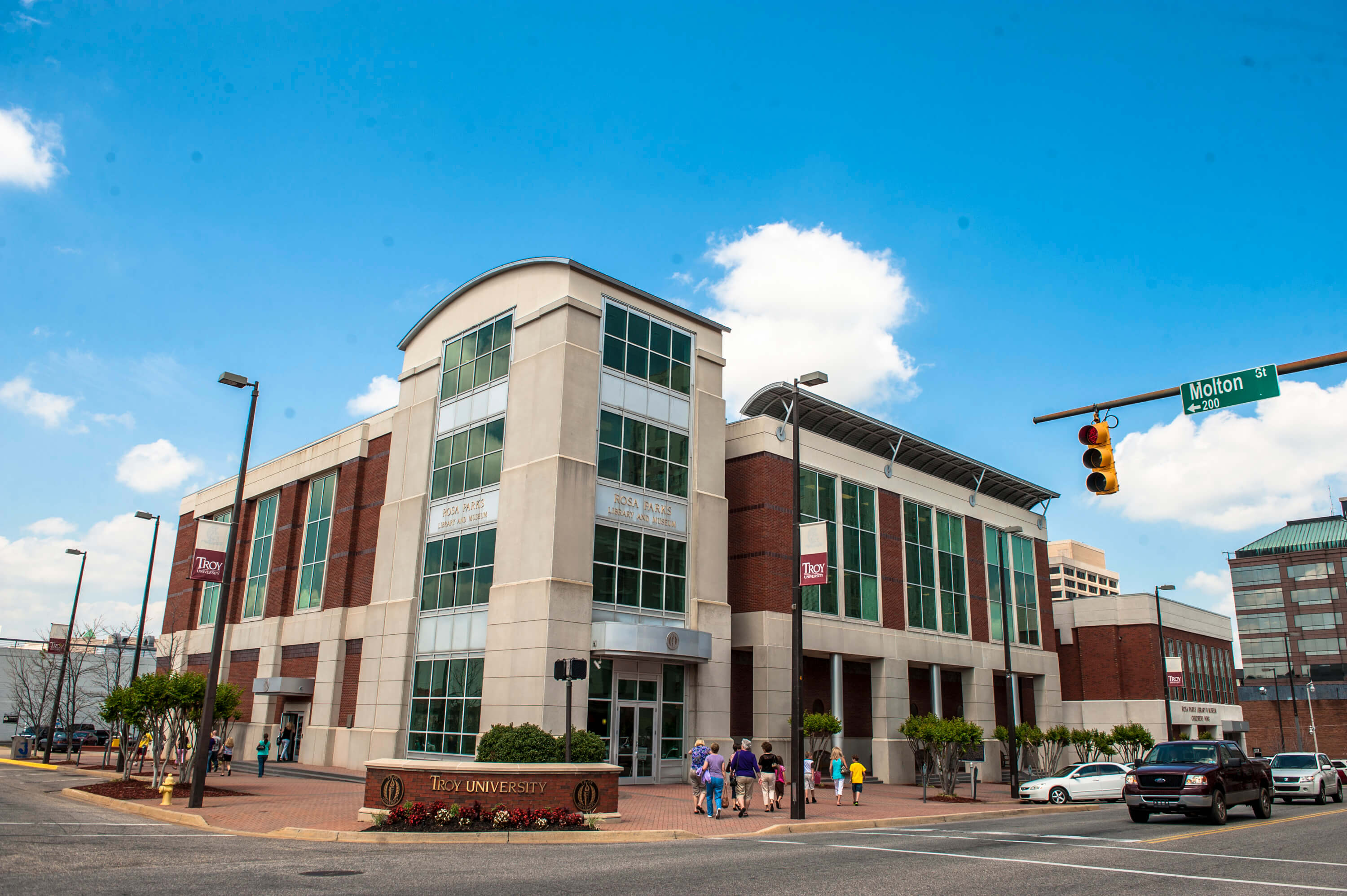
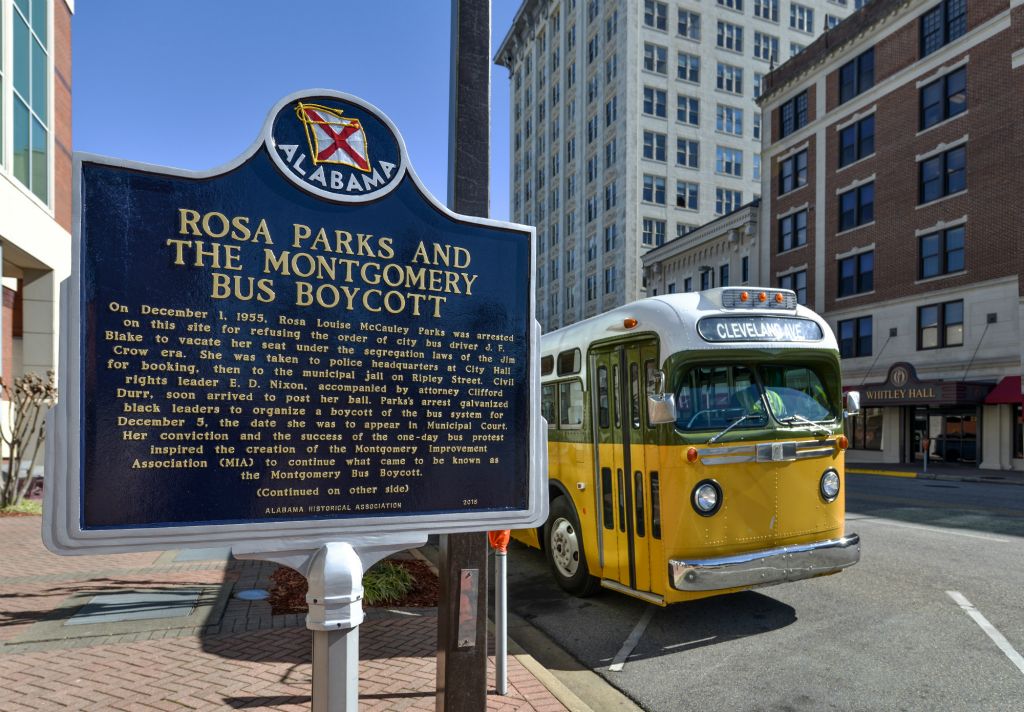
in downtown Montgomery, Alabama at the site where Mrs. Parks was arrested, it is the
nation's only museum dedicated to Rosa Parks. Our mission is to honor her legacy and
that of the boycott by providing a platform for scholarly dialogue, civic engagement,
and positive social change.
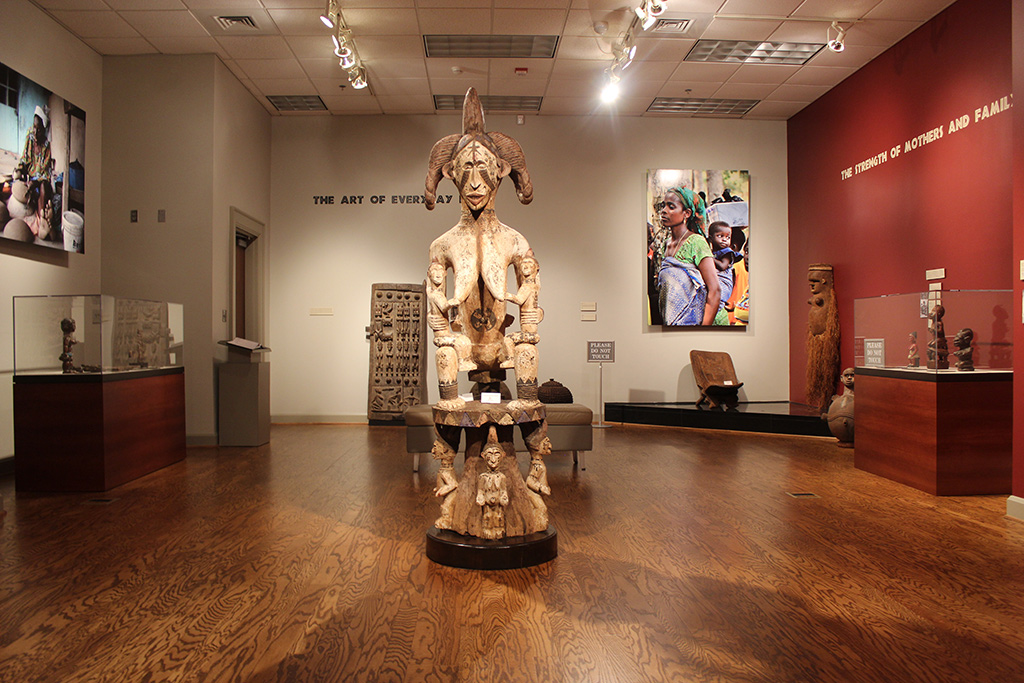
The museum's collection contains a number of historically significant artifacts including
the original fingerprint arrest record of Mrs. Parks, a 1950s-era Montgomery city
bus, original works of art including statuary and quilts, court documents and police
reports, as well as a restored 1955 station wagon (known as a "rolling church") used
to transport protesters.
The Rosa Parks Museum:
Collects, preserves, and exhibits artifacts relevant to the life and lessons of Rosa
Parks, the Montgomery Bus Boycott, and the Civil Rights Movement.
Provides educational programs and scholarly resources for K-12, adult, and lifelong
learners.
Reaches diverse audiences through various cultural events, educational programs, and
temporary exhibitions designed to raise social consciousness, encourage cultural appreciation
and acceptance, and promote peace.
The Life of Rosa Parks
Rosa Louise McCauley was born on February 4, 1913, in Tuskegee, Alabama, to James
and Leona McCauley. At age two, her family moved to Pine Level, Alabama, to live with
her maternal grandparents. Her mother, a school teacher, taught Rosa at home until
age eleven when she moved to Montgomery to live with her aunt. She enrolled in a private
school, the Montgomery Industrial School for Girls, where she cleaned classrooms to
pay her tuition. Later she attended Booker T. Washington High School, but was forced
to leave to take care of her sick mother. In 1932, she married Raymond Parks, to whom
she would remain married until his death in 1977. Though Raymond had very little formal
education, he was self-taught and supported his wife's desire to return to school.
She received her high school diploma in 1934.
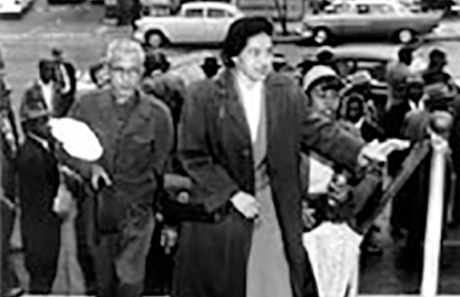
Mrs. Parks worked as a seamstress at Montgomery Fair department store in 1955. On
December 1 of that year, she boarded a city bus and sat on a row in the middle section
where black customers were allowed to sit. The whites only section in the front of
the bus filled up and a white man was left standing. The bus driver demanded that
Mrs. Parks and three other patrons in the middle section give up their seats so the
white man could sit. The other three people moved, but Mrs. Parks had been pushed
around enough and refused to yield her seat. She was arrested when the bus driver
contacted the police and filed charges against her. Four days later she was found
guilty of disorderly conduct and the Montgomery Bus Boycott began.
Over a year later, the city was served with papers declaring segregation of bus service
unconstitutional. The next day, Mrs. Parks boarded a bus and for the first time was
allowed to sit in any unoccupied seat. Her ordeal, however, was not over. She had
lost her seamstress job and was unable to find work. Her family was harassed and threatened.
In 1957, she moved (along with her mother and husband) to Detroit, where her younger
brother Sylvester lived.
In 1965, she joined the staff of U.S. Representative John Conyers of Michigan and
worked there until her retirement in 1988. Mrs. Parks traveled the country extensively
lecturing on civil rights. Through the Rosa and Raymond Parks Institute for Self-Development,
a non-profit organization she co-founded with Elaine Steele in 1987, she worked with
young people to help them achieve their full potential. She has received honorary
degrees from nearly a dozen colleges and universities and has received countless honors
and awards. On April 22, 1998, she attended the groundbreaking ceremonies for the
Troy University Rosa Parks Library and Museum to be located on the spot where she
was arrested. On December 1, 2000, she returned to Montgomery to participate in the
grand opening of the Rosa Parks Library and Museum, dedicated in her honor. Mrs. Parks
and her family were the first to tour the new library and museum.
Donate
The Foundation is the gift receiving entity for Troy University. All donations help
fund community programming and exhibitions at the Rosa Parks Museum.
Within the exhibits and artifacts found inside our museum, you'll learn more about
the people behind the boycott as well as the political and social climates of 1950s
Montgomery. You'll peer into the faces and hear the voices of brave men and women
who fought for freedom peacefully and effectively. Through our exhibits, you will
catch a glimpse of the segregated South and the injustices faced by African American
citizens. You will get an up-close view at the important roles that strategy, interracial
partnerships, and women played within the movement.
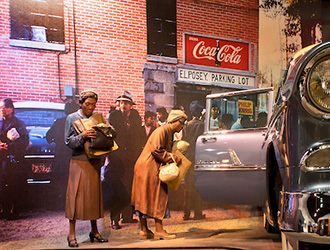
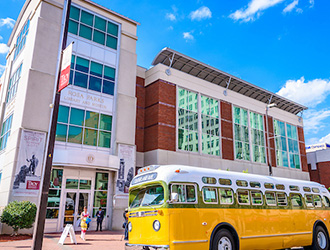
In our main wing, witness Rosa Parks' arrest, view a 1955 Montgomery city bus, and
learn for yourself how a group of willing men and women led by the Montgomery Improvement
Association fueled the resolve of a movement. Visitors will also view a 1956 station
wagon used as the basis for an extensive carpooling system. While traveling through
time, you'll meet Rev. Dr. Martin Luther King, Jr. and see the mass effect the Montgomery
Bus Boycott and Civil Rights Movement had on the world.
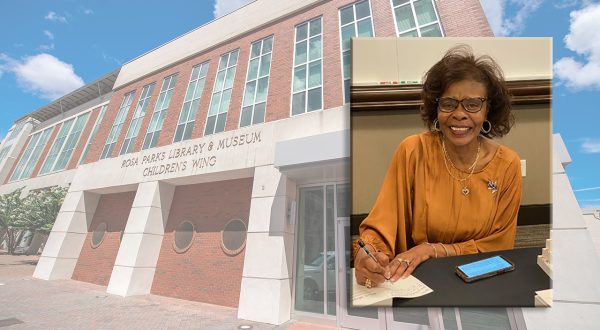
Our Cleveland Avenue Time Machine in the Rosa Parks Museum's Children's Wing takes
visitors back in time to the 1800s and the onset of Jim Crow segregation. Guests will
"meet" Dred Scott, Homer Plessy, Harriett Tubman, and Henry "Box" Brown fought against
this oppressive system.
Visit
Museum Hours:
Monday – Friday
9:00 a.m. – 5:00 p.m. (Last admission sold at 4:00 p.m. for Museum; 4:30 p.m. for
Children's Wing)
Saturday
9:00 a.m. – 3:00 p.m. (Last admission sold at 2:00 p.m. for Museum; 2:30 p.m. for
Children's Wing)
Sunday
CLOSED
Lunch Hours
The Rosa Parks Museum closes Monday through Friday from 12:00 PM to 1:00 PM for lunch.
Our final admission beforehand is 11:00 AM, and admissions resumes at 1:00 PM each
day.
Holidays
CLOSED: November 27-29 ; December 24-27 ; and December 31 - January 1
All tours are self-guided and begin on the hour and half hour.
Admissions:
5 -12 years of age:
4 years and under:
$5.50 one wing / $10.00 both wings
FREE
13+ years of age:
$7.50 one wing / $14.00 both wings
Admission Discounts ($1 off per wing):
Military, Seniors (62+), &Educators Groups of 25 or more:$1.50 off per wing *Discounted offers cannot be combined, and up-to-date, valid ID is required*
Location
Through immersive exhibits, interactive storytelling, and educational programming,
visitors are invited to engage with the legacy of Rosa Parks and the broader Civil Rights Movement.
Just steps away, the Children's Wing, offers a dynamic, hands-on learning environment
designed to spark curiosity in younger audiences. Here, history becomes approachable
and engaging, reinforcing Troy University's commitment to education at every level.
Museum: 252 Montgomery Street, Montgomery, AL 36104 Children's Wing: 220 Montgomery Street, Montgomery, AL 36104
Groups of 10 or more MUST schedule a tour slot prior to visiting the museum. Please
call 334-241-8661 or email rosaparks@troy.edu to schedule a tour. **If any group shows up without a prescheduled tour, admission
cannot be guaranteed.
Scheduled groups are strongly encouraged to pay in advance to secure their time slot.
Please call our Gift Shop at 334-241-8616 to make payment.
**Our tour capacity is about 50 people per tour. If you are planning a visit (especially
in the spring), you are encouraged to call ahead (334-241-8615) to check our availability.
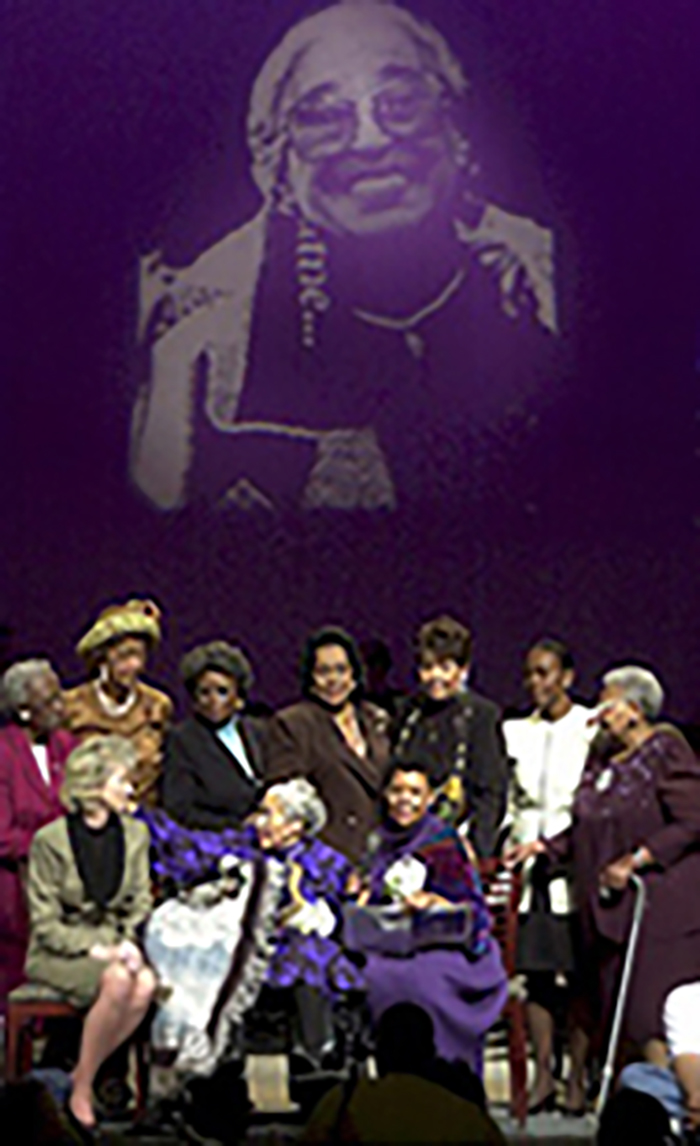
The Dedication of the Rosa Parks Library and Museum
December 1, 2000, Montgomery, AL
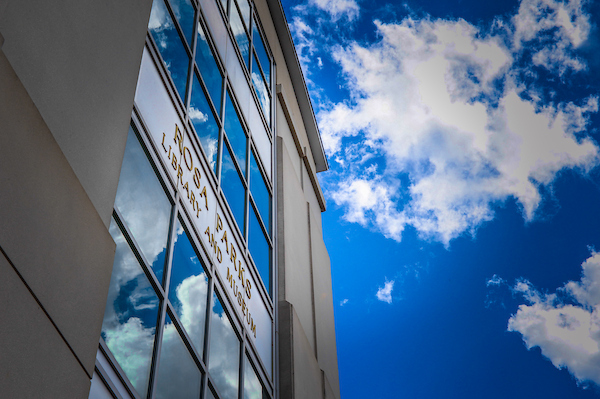
Rosa Parks, the "Mother of the Civil Rights Movement" was the guest of honor when
Troy University dedicated its new library and museum. The library will carry Mrs.
Parks' name and commemorates her refusal to give up her seat up on the Montgomery
City Bus to a white man. The incident occurred on December 1, 1955, at the site where
the library is constructed and the museum depicts the event and the ensuing activities
in the 382-day Montgomery Bus Boycott.
"Troy University, Montgomery Campus seized the opportunity of preserving the memory
of courageous acts and courageous people, while using the property to best meet the
needs of our students," Dr. Cameron Martindale said. The structure is a three-story,
55,000 square-foot state-of-the-art library to more than 3,100 non-traditional urban
Troy University, Montgomery Campus students and the citizens of Montgomery and a museum
and research center for those who will strive to understand the event that began the
famous Bus Boycott.
Dr. Jack Hawkins, Jr., Chancellor of The Troy State University System, stated: "I
am very proud that Troy State University decided to undertake the creation of this
unique museum. The Rosa Parks Library and Museum is an important part in the continued
revitalization of downtown Montgomery, and it also serves both the community and the
state as a focal point in our nation's history."
The ceremony began at 1 p.m. in the Davis Theatre for the Performing Arts, 231 Montgomery
Street, Montgomery, Alabama, on the Troy University, Montgomery Campus, honoring Mrs.
Parks on the 45th anniversary of her arrest. The dedication ceremony included remarks
from Mrs. Rosa Parks, Ms. Elaine Steele, TROY Chancellor Jack Hawkins, Jr., and Troy
University, Montgomery Campus President Cameron Martindale. U.S. Senator Jeff Sessions,
Alabama Governor Don Siegelman and Montgomery Mayor Bobby Bright also spoke.
A tribute from the Women of the Movement was given to include Dr. Juanita Abernathy,
Dr. Johnnie Mae Carr, Dr. Dorothy Height, Dr. Coretta Scott King, and Dr. Mamie Till-Mobley,
and other dignitaries. There were other special presentations by Larry Long with the
Youth of Rural Alabama, the Pathways to Freedom Youth, and the Troy State University
Symphony Band and Gospel Choir.
The opening tour of the museum was at 5 p.m. Other events of the day included lectures
at 9:30 a.m. by Dr. Douglas Brinkley, author of "Rosa Parks", and at 10:30 a.m. by
Vernon Jarrett, veteran journalist and historian, in the auditorium of the Rosa Parks
Library and Museum. Also, an exhibition of Yvonne Wells' colorful, narrative quilts
depicting the Civil Rights Movement was on display at the museum. A Parade of Choirs
entertained outside the Troy University Montgomery Campus before the program begins
in the Davis Theatre.
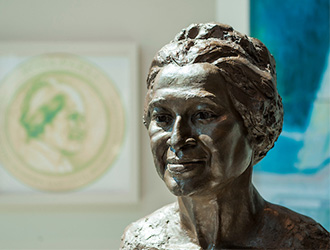
The museum contains an Erik Blome sculpture of Rosa Parks on the bus bench and portraits
and sculpture of Rosa Parks by Los Angeles artist Artis Lane. The museum exhibits
were designed and created by Eisterhold and Associates, Inc. The building design was
by Sherlock, Smith and Adams. The General Contractor was Bear Construction Company.
Montgomery Bus Boycott
On Thursday, December 1, 1955, Rosa Parks was arrested for refusing to give up her
seat to a white man on a public bus. In response, the Women's Political Council distributed
fliers throughout the community urging African Americans to boycott the bus line on
the day of Mrs. Parks's trial. The following Monday, Mrs. Parks was found guilty of
disorderly conduct and fined. That afternoon, a meeting was held at Mt. Zion A.M.E.
Zion Church and the Montgomery Improvement Association was formed. Dr. Martin Luther
King, Jr. was selected as the new organization's president.
That evening, a meeting was held at the Holt Street Baptist Church. The attendees
decided that continuing the bus boycott would be an effective way to protest the segregated
bus service.
In terms of participation, the bus boycott was an immediate success. Virtually all
of the African Americans who formerly patronized the bus service now walked, arranged
carpools, or found other means of transportation. Despite the strong participation
in the boycott and the financial hardship experienced by the bus company, the laws
were not changed. The Montgomery Improvement Association filed suit in federal court
on behalf of those discriminated against by the bus service. On June 2, 1956, a federal
court ruled for the Montgomery Improvement Association and declared segregated bus
service to be unconstitutional. The ruling was appealed to the United States Supreme
Court which, on November 13, 1956, upheld the lower court's findings. The boycott
ended on December 20, 1956—382 days after Mrs. Parks's conviction when the court order
requiring integrated bus service was served to Montgomery officials.
Parking
The Rosa Parks Museum is owned by Troy University. Persons coming to the Rosa Parks
Museum are welcome to park in any Troy University, Montgomery Campus parking lot.
There is no charge to park on Troy University, Montgomery Campus property when visiting
the Museum.
Be careful not to park in any space marked as reserved or in lots owned by other businesses
such as Alabama Gas Corporation or the U.S. Post Office.
There is also on-the-street, metered parking. Parking meters are ticketed weekdays,
8:00 a.m. – 6:00 p.m. Weekends, holidays, and evenings, meters are not monitored and
parking tickets are not issued.
Designated Handicap Parking spaces are located along Montgomery Street and in the
Troy parking lots.
If you have any questions about parking, ask any Troy University, Montgomery Campus
Police Officer.
There were approximately 30,000 blacks of voting age living in Montgomery in 1954,
yet only 2,000 were registered to vote. Blacks were often banned from holding public
offices not only in Montgomery but throughout the Jim Crow South. In 1950, the median
annual income for whites was $1,730 while the median annual income for blacks was
$970. Sixty-three percent of African American females were domestic workers (working
in homes as maids, nannies, etc.) whereas forty-eight percent of African American
males were domestic workers. Montgomery schools were still segregated despite the
U.S. Supreme Court's 1954 ruling in Brown v. Board of Education that segregation in
public places was unconstitutional.
What were the “Jim Crow” laws?
The “Jim Crow laws” were laws established in the South and were meant to enforce segregation.
These “laws” got their name from a minstrel routine by the name of Jump Jim Crow that
was supposedly inspired by the ridiculing of a crippled African slave named Jim Crow.
By the end of the 1930s, the term “Jim Crow” was used as a derogatory name for African
Americans, thus leading the segregation laws to be referred to as “Jim Crow laws”.
These laws were supported with the U.S. Supreme Court's “separate but equal” decision
in Plessy v. Ferguson. The Jim Crow laws prohibited African Americans from having
access to certain forms of employment and to public places, such as restaurants, hotels,
and other facilities. In the South especially, blacks lived in fear of racially motivated
violence.
Examples of Alabama “Jim Crow” laws
HospitalsNo person or corporation shall require any white female nurse to nurse in wards or
rooms in hospitals, either public or private, in which Negro men are placed.
BusesAll passenger stations in this state operated by any motor transportation company
shall have separate waiting rooms or space and separate ticket windows for the white
and colored races.
RailroadsThe conductor of each passenger train is authorized to and required to assign each
passenger to the car or the division of the car, when it is divided by a partition,
designated for the race to which such passenger belongs.
RestaurantsIt shall be unlawful to conduct a restaurant or other place for the serving of food
in the city, at which white and colored people are served in the same room, unless
such white and colored persons are effectually separated by a solid partition extending
from the floor upward to a distance of seven feet or higher, and unless a separate
entrance from the street is provided for each compartment.
Pool & Billiard RoomsIt shall be unlawful for a Negro and white person to play together or in company with
each other at any game of pool or billiards.
What was the catalyst for the Montgomery Bus Boycott?
On December 1, 1995, Rosa Parks, a 42 year-old African American seamstress, boarded
a Montgomery City Lines bus to go home from work. She sat near the middle of the bus
in the neutral section just behind the ten seats reserved for white passengers. Soon,
the seats in the white section were filled. When a white man entered the bus, the
driver (following standard practices of segregation) insisted that the four blacks
sitting in the first row of “colored” seats give up their seats so that the white
man could sit down. Mrs. Parks quietly refused to give up her seat and was, therefore,
arrested.
What crime was Rosa Parks charged with when she was arrested?
Rosa Parks was arrested and convicted of violating the laws of segregation known as
the “Jim Crow laws” and for disorderly conduct. She was found guilty and fined $10.00
plus $4.00 in court fees. She appealed her conviction, thus formally challenging the
legality of segregation.
What were the bus laws in Montgomery at the time?
In 1906 (during the Jim Crow era), a new city ordinance was passed in Montgomery that
segregated public transportation. The ordinance said that blacks in all public accommodations,
such as trolleys, had to be completely separated from whites. The law did not merely
require partitions between the races, there could be no mixing at all. The ordinance
sparked the first protest over racial discrimination on Montgomery mass transit. This
protest was known as the “Lightning Route Trolley Boycott” by streetcar conductors
and their management who chose to protest the law. It resulted in a compromise that
established the Montgomery rule that “blacks sit in the back.” In addition, blacks
often had to pay at the front entrance to bus, disembark the bus, and then move to
the “colored” entrance at the back of the bus. It became the accepted rule that whites
were to enter the bus at the front and begin filling it from front to back. Blacks
were to get on the bus in the back and begin filling seats back to front. Once the
black section was full, any other blacks who boarded had to stand. If the white section
was full, black in the front of the “colored” section had to get up and give their
seat to the white rider. Mrs. Parks' attorney, Fred Gray, remembered, “Virtually every
African American person in Montgomery had some negative experience with the buses.
But we had no choice. We had to use the buses for transportation.”
Did Rosa Parks and the NAACP plan the events that led to her arrest and the subsequent
Montgomery Bus Boycott?
No. Mrs. Parks' actions were spontaneous and not premeditated, although her previous
civil rights involvement, nonviolence training, and strong sense of justice were obvious
influences. “When I made that decision,” she said later, “I knew that I had the strength
of my ancestors with me.”
However, it was fitting that the civil rights movement really began on a city bus
because the “separate but equal” foundation for the Jim Crow laws actually started
on a racially segregated train. In a famous 1896 case, Plessy v. Ferguson, the U.S.
Supreme Court pronounced the separate but equal rationale, but of course, the facilities
and treatment were never equal. Mrs. Parks remembers going to school in Pine Level,
Alabama, where buses took white kids to the new school, but black kids had to walk
to their school. “I'd see the bus pass every day,” she said, “but to me, that was
a way of life; we had no choice but to accept what was the custom. The bus was among
the first ways I realized there was a black world and a white world.”
Under Jim Crow customs, it was relatively easy to separate the races in every area
of life except transportation. Bus and train companies often couldn't afford separate
cars, so blacks and whites had to occupy the same space. Thus, transportation was
one of the most volatile arenas for race relations in the South.
Were there attempts to boycott before December 1955?
In May, 1954, four days after the Supreme Court's Brown v. Board of Education ruling,
Jo Ann Robinson, an English teacher at Alabama State College (now Alabama State University)
who had had her own traumatic experience on a bus in 1949, wrote a letter to Montgomery
Mayor W. A. Gayle. Robinson was the president of the women's Political council and
in this letter threatened a black boycott of Montgomery buses if abuses on the buses
were not curtailed.
Who was Jo Ann Robinson, and what role did she play in the Montgomery Bus Boycott?
Jo Ann Gibson Robinson was born on April 17, 1912, in Culloden, Alabama, and was the
youngest of twelve children. She was educated in the segregated public schools of
Macon, Georgia, and later at Fort Valley State College. She then earned an M.A. in
English at Atlanta University. In the fall of 1949, she accepted a position as professor
of English at Alabama State College in Montgomery where she remained throughout the
Montgomery Bus Boycott.
Ms. Robinson joined both the Dexter Avenue Baptist Church and its Women's Political
Council (WPC), which had been founded by another Alabama State English professor Mary
Fair Burks. Near the end of 1949, while boarding a public bus to go to a friend's
house before going to the airport, Robinson was humiliated by an abusive and racist
Montgomery City Lines bus driver who yelled at and ridiculed her for mistakenly sitting
in the “white section” of the bus even though there were only two other passengers
on board. Because of this incident, she used the WPC to target racial seating practices
on Montgomery buses.
In 1960, after years of being targeted and harassed for her role in the civil rights
movement, Robinson left Alabama State (and Montgomery), as did many other activist
faculty members. After teaching for one year at Grambling College, Robinson moved
to Los Angeles, where she taught English in a public school until her retirement in
1976. Robinson's health suffered a serious decline just as her memoir, The Montgomery
Bus Boycott and the Women Who Started It, was published in 1987. She was honored with
a 1989 publication prize given by the Southern Association for Women Historians but
was unable to accept the award in person due to her poor health. She died in Los Angeles
on August 29, 1992.
What was the Women's Political Council?
In 1946, Mary Fair Burks had been refused permission to become a member of the League
of Women Voters and later was arrested after a traffic disagreement with a white woman.
These events led her to form an organization meant to fight the injustices of the
discriminatory separate but equal doctrine in Montgomery. Her main goal was to teach
African Americans their constitutional rights in order to get them to vote. The WPC
became one of the most active organizations in the struggle for equal rights and promoting
social justice. Burks remained president until Jo Ann Robinson took over in 1950.
The WPC was a vital part of the bus boycott and was actually the group that initially
called for and organized a boycott after Rosa Parks' arrest.
What was the MIA?
Jo Ann Robinson and the Women's Political Council began to organize a one-day protest
after Rosa Parks' arrest in December of 1955. It was Robinson, along with some of
her students, who produced and distributed the leaflets encouraging blacks in Montgomery
to stay off the buses the following Monday (December 5, 1955). When word spread of
the boycott, local black leaders wanted a meeting to discuss and organize their plans
moving forward. Many prominent African American leaders in Montgomery, under the leadership
of E.D. Nixon, former chair of the NAACP of Montgomery and including Rev. Martin Luther
King, Jr., Ralph Abernathy, H.H. Hubbard, and Ms. A.W. West gathered and finally proceeded
with an organized movement. A meeting was held the day after Mrs. Parks' arrest at
the Holt Street Baptist Church where a group ranging from students to church groups
to prominent city leaders in the black community met and from there decided that in
order to efficiently and effectively carry out their goal of combating the racism
of the segregation laws, a boycott was not only necessary but vital. As a result,
the Montgomery Improvement Association (MIA) was formed, with Reverend Martin Luther
King, Jr. as its leader. The MIA adopted a plan of action for the protest that was
officially to begin on December 5, 1955.
What were the goals of the MIA?
At the onset of the boycott, African American leaders in Montgomery weren't looking
to end segregation on Montgomery city buses; they just wanted to be treated fairly.
The MIA initially had three simple demands:
Blacks would not ride the buses until polite treatment by bus drivers were guaranteed
to them.
Seating should be offered on a first-come, first-served basis.
Black bus drivers should be employed especially in areas that were predominantly black.
When these demands were met, blacks would resume riding the city buses.
Rosa Parks was not the first woman arrested on a bus in Montgomery. Who were the others
who preceded her?
On March 2, 1955, 15-year-old Booker T. Washington student Claudette Colvin was the
first young woman to be arrested for refusing to give up her seat to a white person.
Charged with violating the segregation laws, she was tried, convicted, and fined.
She was a plaintiff and testified in the Browder v. Gayle case. [see below for more]
One month later, in April 1955, Aurelia Shines Browder was arrested for refusing to
give up her seat to a white passenger. She was named as the lead plaintiff in the
Browder v. Gayle case.
On October 21, 1955, Mary Louise Smith, and 18-year-old student refused to give up
her seat on a bus to a white woman and was arrested on the spot. She was tried, jailed,
and fined nine dollars. She was also a plaintiff and testified in Browder v. Gayle.
Why didn't Claudette Colvin's arrest pose a challenge to bus segregation in Montgomery?
Although Fred Gray and Charles Langford, the city's only African American attorneys,
ably defended her, the juvenile court judge (first cousin of Alabama senator J. Lister
Hill) found Colvin guilty of violating the state, not city, bus segregation law just
two weeks after her arrest. She was also found guilty of assault and battery and for
resisting arrest. As a result, she was given probation. Gray and Langford appealed
to the Montgomery Circuit Court, and on May 6, 1955, Judge Eugene Carter affirmed
the assault conviction while dismissing the segregation code violation. His ruling
prevented the lawyers from using Colvin's arrest as a test case to challenge the bus
segregation laws. In addition, her parents did not want her used as a test case in
the public eye.
The Colvin incident roused the black community in Montgomery. The Citizens Coordinating
Committee, led by local businessman Rufus Lewis, issued an appeal to the “Friends
of Justice and Human Rights.” It denounced “certain legal and moral injustices incurred
in the public transportation system” and offered the Colvin case as “an opportunity,
in the spirit of democracy, and in the spirit of Christ, to deal courageously with
these problems.”
What kind of impact did the boycott have on the community at large?
Since African Americans made up about 75 percent of the bus riders in Montgomery,
the boycott posed a serious economic threat to the bus company a social threat to
white rule in the city.
Initially, Montgomery city officials were amused the demands of the MIA and the boycott
and thought it would quickly fade out. After the first months of the boycott, they
were not as amused as the boycott continued affecting Montgomery's economy. White
downtown business owners began to feel the effects of the boycott as they were receiving
less traffic in those areas. The bus companies began losing approximately $3,000.00
per day from lost fares. As a result, the bus company raised fares and terminated
bus routes in many African American neighborhood to offset the losses. Many white
families who employed black domestic workers (such as maids, cooks, etc.) were unhappy
that they had to travel miles to carry their workers to and from work. On January
23, 1956, negotiations between Mayor Gayle, the bus company, and the MIA ceased. Mayor
Gayle stated that there would be no more negotiations until Montgomery's African American
citizens got back on the buses.
Once the white leaders of Montgomery realized these techniques were not working in
getting people back on the buses, they turned their attentions towards the citizens
themselves.
The social impact of the boycott was also felt throughout Montgomery. Even though
many whites were upset with having to drive their workers, other white housewives
were sympathetic to the cause and willingly drove their workers wherever they needed
to go. Occasionally, as a way to try to stop the boycott, black were arrested for
simply walking down the street. They often had things such as water and urine thrown
on them as an intimidation technique. The boycott leaders also suffered. Rev. King's
house was bombed in January of 1956, as was the house of Rev. Robert Graetz in August
1956. These tactics did not work, and the boycott remained in effect. Also in January
of that year, Mayor Gayle and several other white leaders of Montgomery formed the
local chapter of the White Citizens' Council (WCC) whose main goal was to maintain
racial segregation. Mayor Gayle encouraged Montgomery citizens to not give in to the
demands of the boycotters because they were “after the destruction of our social fabric.”
What was the significance of Browder v. Gayle?
By early 1956, attorney Fred Gray had vowed to end segregation. On February 1st of
that year, Gray and Charles Langford filed a petition in federal district court that
would later become known as the Browder v. Gayle case. The petition was filed on behalf
of four other women who had been arrested or fined for refusing to give up their bus
seats to white passengers: Claudette Colvin, Aurelia Browder, Mary Louise Smith, and
seventy-year-old Susie McDonald. (Jeanette Reese was another original plaintiff, but
she withdrew her name shortly thereafter due to being threatened and intimidated by
white citizens.) Browder v. Gayle challenged the constitutionality of a state statute
and therefore had to go before a three- judge U.S. District Court panel. On June 5,
1956, the panel ruled that segregation on Alabama, and thus Montgomery, buses was
unconstitutional. Mayor Gayle then filed an appeal hoping to reverse the lower court's
decision. On November 13, 1956, the U.S. Supreme Court upheld the District Court's
ruling. Dr. King urged citizens not to return to the buses and implement integration
until the documentation from the court arrived in Montgomery. On December 17, 1956,
the Supreme Court rejected city and state appeals to reconsider their decision. Three
days later (381 days after the boycott started), the order for integrated buses arrived
in Montgomery. African Americans in Montgomery returned to the buses on December 21,
1956, 382 days after the Montgomery Bus Boycott began. On this day, Dr. King, Rev.
Ralph Abernathy, Fred Gray, Rev. Glenn Smiley, and other boycott leaders rode the
buses around town greeting passengers and showing their appreciation for the masses
who had sacrificed to make the boycott a success. These became known as the Victory
Rides.
What was the impact of the Montgomery Bus Boycott?
The majority of the white community in Montgomery did accept the Supreme Court's ruling
in Browder v. Gayle, even if they weren't necessarily happy about it. There were still
instances of violence, and racial tensions ran high for many years to come. Even though
the buses were integrated, it took about another ten to fifteen years for segregation
to be completely banned in Montgomery.
Furthermore, the Montgomery Bus Boycott started what would become known as the Modern
Civil Rights Movement. Several of the boycott leaders, such as King and Abernathy,
went on to lead other civil rights events. Many of the techniques of nonviolent resistance
that were used to great success went on to great effectiveness in other civil rights
events.
Commemorative Brick Program
Pay close attention to the courtyard surrounding TROY's Rosa Parks Museum and you'll
see bricks bearing the names of men, women, and organizations who have been honored within the Museum's Walk of Honor. Located near the very spot where Mrs. Parks was arrested,
the Walk of Honor is used every day by men, women, and children from around the globe
who come to visit the Museum and learn more about the Montgomery Bus Boycott. Along
the pathway leading into the Museum, the Entrance of Honor also showcases bricks bearing
the names of those who believe in the efforts and sacrifices made by the protesters
during the Montgomery Bus Boycott and Civil Rights Movement.
Friends and supporters of Troy University and the Rosa Parks Museum can become a permanent
part of the Museum complex or honor a loved one by purchasing an inscribed brick within
the Walk of Honor or Entrance of Honor.
Entrance of Honor: $250 per brick Walk of Honor: $100 per brick
Contact Information:
To purchase a Commemorative Brick and for more information, please contact Donna Beisel
at334.832.7295ordbeisel@troy.edu.

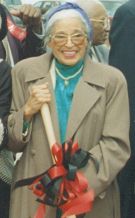 Rosa Louise McCauley was born on February 4, 1913, in Tuskegee, Alabama, to James
and Leona McCauley. At age two, her family moved to Pine Level, Alabama, to live with
her maternal grandparents. Her mother, a school teacher, taught Rosa at home until
age eleven when she moved to Montgomery to live with her aunt. She enrolled in a private
school, the Montgomery Industrial School for Girls, where she cleaned classrooms to
pay her tuition. Later she attended Booker T. Washington High School, but was forced
to leave to take care of her sick mother. In 1932, she married Raymond Parks, to whom
she would remain married until his death in 1977. Though Raymond had very little formal
education, he was self-taught and supported his wife's desire to return to school.
She received her high school diploma in 1934.
Rosa Louise McCauley was born on February 4, 1913, in Tuskegee, Alabama, to James
and Leona McCauley. At age two, her family moved to Pine Level, Alabama, to live with
her maternal grandparents. Her mother, a school teacher, taught Rosa at home until
age eleven when she moved to Montgomery to live with her aunt. She enrolled in a private
school, the Montgomery Industrial School for Girls, where she cleaned classrooms to
pay her tuition. Later she attended Booker T. Washington High School, but was forced
to leave to take care of her sick mother. In 1932, she married Raymond Parks, to whom
she would remain married until his death in 1977. Though Raymond had very little formal
education, he was self-taught and supported his wife's desire to return to school.
She received her high school diploma in 1934.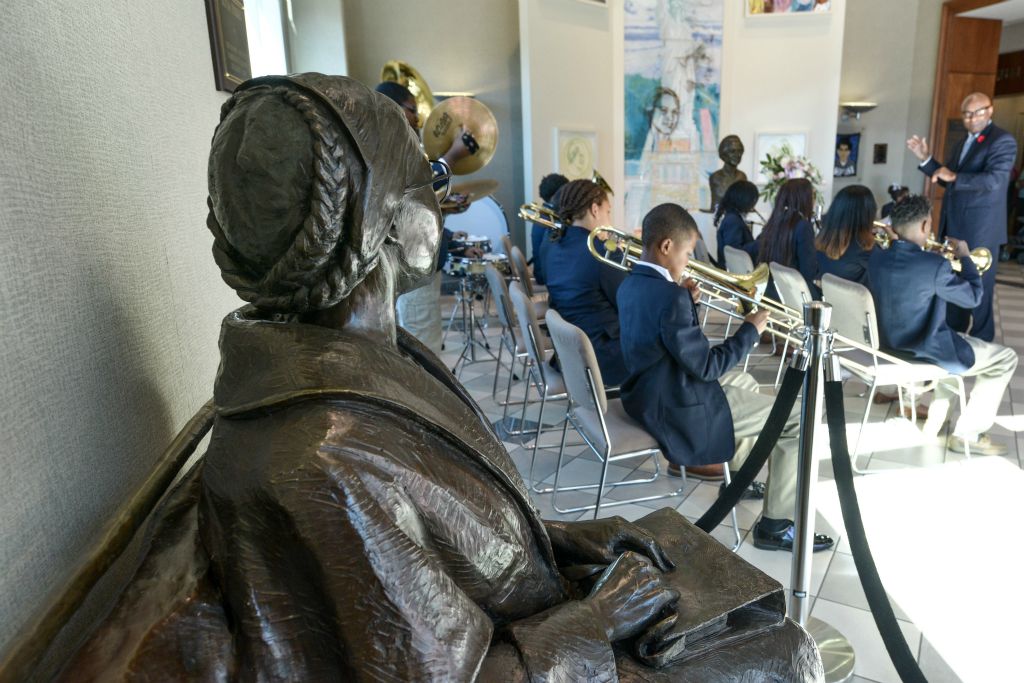
 December 1, 2000, Montgomery, AL