
Terry and Barbara Everett Symposium
Terry Everett Hall, Dothan Campus | Hosted by Troy University.
Terry Everett Hall, Dothan Campus | Hosted by Troy University.
Generative AI and Agentic AI systems are rapidly transforming decision-making, automation, public communication, cybersecurity operations, and business workflows across both government and private organizations. In 2026, adoption has shifted from experimentation to production: AI agents now plan, reason, and take multi-step actions across enterprise systems, and governments are applying AI deeper into core operating functions. At the same time, binding regulation has arrived — the EU AI Act reaches its principal application date this year, U.S. states have enacted a fast-growing patchwork of AI laws, and federal preemption efforts are being contested in the courts.
This symposium explores how organizations can responsibly deploy AI systems while maintaining transparency, accountability, data privacy, regulatory compliance, and public trust. Special focus is placed on governance frameworks, human oversight, bias mitigation, agent identity and access control, AI-generated content labeling, and the unique risks posed by autonomous or semi-autonomous AI agents.
Certificates of attendance will be provided. Attendees may submit their certificate and event agenda to their respective licensing board or professional association for consideration of continuing education credit.Friday, September 18
|
Time |
Agenda - *all scheduled items, unless noted, will be held in Sony Hall |
|
8:00 – 9:00 AM |
Sign-In & Registration Foyer / Atrium |
|
9:00 – 9:15 AM |
Opening Remarks Dr. Judson Edwards, Interim Provost and Senior Vice Chancellor for Academic Affairs, Troy University |
|
9:15 – 10:00 AM |
"The 2026 AI Regulatory and Legal Landscape: Building Public Trust" Eddie Sorrells, Chief Executive Officer, DSI Security — 40-minute presentation, 5-minute Q&A |
|
10:00 – 10:45 AM |
"From Red Flag to Real Consequence: How Much Should AI Influence Decisions?" Dr. Jay Claiborne, Professor of Practice, Information Systems, Troy University — 40-minute presentation, 5-minute Q&A |
|
10:45 – 11:30 AM |
"Raising AI: The Formative Years" Anna Grace Du Noyer, Global Chief AI, Ethics & Impact Officer, Electus Global Education — 40-minute presentation, 5-minute Q&A |
|
11:30 AM – 12:00 PM |
Lunch Break - Harrison Room |
|
12:00 – 12:45 PM |
"Algorithmic Homeland: How AI is Reshaping Cybersecurity and Homeland Defense" Klint Walker, Cyber Security Advisor, CISA, U.S. Department of Homeland Security — 40-minute presentation, 5-minute Q&A |
|
12:45 – 1:30 PM |
"The AI Ethics are in the Output: A Cybersecurity, Governance, and Digital Innovation Perspective for Government & Business Leaders" Dr. Edward Fulford, Assistant Professor of Cybersecurity and Business Analytics, Troy University — 40-minute presentation, 5-minute Q&A |
|
1:30 – 2:15 PM |
"Human Judgment as Critical Infrastructure: Preserving Critical Thinking in an AI-Assisted World" Aaron Wright, Chief AI Officer, Alabama Office of Information Technology — 40-minute presentation, 5-minute Q&A |
|
2:15 – 2:45 PM |
Panel Discussion — "Maturing AI Ethically and Responsibly: Governance, Trust, and Growing Pains" Moderator: Dr. Edward Fulford — Panelists: Eddie Sorrells, Dr. Jay Claiborne, Anna Grace Du Noyer, Klint Walker, Aaron Wright |
|
2:45 – 3:00 PM |
Closing Remarks Dr. Edward Fulford, Assistant Professor of Cybersecurity and Business Analytics, Troy University |
 Anna Grace Du Noyer, Chief AI, Ethics and Impact Officer, Electus Global Education
Anna Grace Du Noyer is an AI ethicist, author, and inventor of Infiniti AI: a patent-pending,
sector-agnostic, API-driven social impact intelligence system that directs resources
to the people, programs, and communities where they will generate the highest marginal
return. During the COVID-19 pandemic, she was appointed Chair of a UK Government Multidisciplinary
Digital Communications Collaborative, working with data science and health teams that
increased vaccine take up. She has consulted for Microsoft, advised UN Women on equitable
technology access, and influenced national digital inclusion policy. In her role as
Chief AI, Ethics and Impact Officer for Electus Global Education, a Florida-based
company, she oversees the development and deployment of AI across the organization's
platforms.
 Dr. Jay Claiborne; Professor of Practice/Sorrell College of Business
Jay Claiborne, PhD, is a Professor of Practice in the Center for AI Research and Education at Troy University's Sorrell College of Business. His teaching and research focus on applied artificial intelligence, machine learning, data analytics, and the use of AI to support business and public-sector decision-making. His current work includes predictive modeling, responsible AI use, and collaborative AI initiatives involving transportation, public safety, and organizational decision support.
 Eddie Sorrells, CPP, PSP, PCI
Eddie Sorrells is CEO of DSI Security Services and a nationally recognized security
industry leader with more than 30 years of experience. Beginning his career as a security
officer, he has built expertise in workplace violence prevention, physical security,
employment law and security technology. A licensed Alabama attorney, he holds degrees
from Troy University and the Thomas Goode Jones School of Law. Sorrells is the author
of Security Litigation: Best Practices for Managing and Preventing Security-Related Lawsuits and the forthcoming Lead Where You Stand. A frequent speaker and published author, he serves as president of ASIS International,
the world's largest association for security professionals, after serving on its Global
Board of Directors. He also serves on the board of the National Association of Security
Companies and was named to IFSEC's Global Influencers list for Security Thought Leadership
in 2022.
 Dr. Ed Fulford, Assistant Professor; Chief Security Officer and Managing Partner,
Electus Global Education
Dr. Ed Fulford, Assistant Professor; Chief Security Officer and Managing Partner,
Electus Global Education
Dr. Edward (Ed) Fulford is an accomplished Cybersecurity and Data Analytics advisor,
Artificial Intelligence (AI) security evangelist, author, educator, and entrepreneur.
He has over 30 years of leadership experience in Cybersecurity and Technology Risk
Management with major global organizations including British Telecom, Delta Airlines,
FIS Global, and Global Payments. Currently an Assistant Professor of Cybersecurity
and Data Analytics at Troy University, Dr. Fulford holds the Doctor of Business Administration
degree from the University of South Florida and the MBA from Troy University. He holds
Ed several professional certifications in Cybersecurity and Technology Risk Management
including the Certified Fraud Examiner (CFE). Certified Information Systems Auditor
(CISA), Certified Information Security Manager (CISM), Certified Data Privacy Solution
Engineer (CDPSE), Certified Information Systems Security Professional (CISSP), and
Payment Card Industry Professional (PCIP) credentials.
 Aaron Wright; Chief Artificial Intelligence Officer, Alabama Office of Information Technology
Aaron Wright serves as chief artificial intelligence officer for the Alabama Office
of Information Technology, leading the state's efforts to responsibly integrate AI
across government, strengthen data-driven decision-making and improve services for
Alabamians. His work focuses on building a statewide AI foundation, expanding workforce
education, developing practical governance processes and helping agencies achieve
secure, measurable results. Wright brings more than 25 years of technology leadership
experience in healthcare and state government. He joined the State of Alabama in 2010
and has held leadership roles in enterprise applications, data strategy and cross-agency
technology initiatives. He previously co-led the Data Management and Ownership working
group for the Governor's Generative AI Task Force and currently leads the state's
AI Community of Practice. Wright holds a master's degree in information technology
from the University of West Florida.
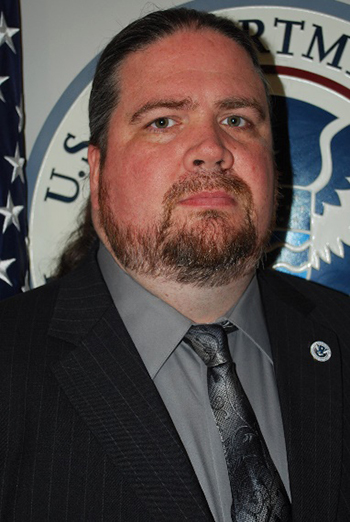 Klint Walker; Chief of Cyber and Cyber Security Advisor, Region 4, U.S. Cybersecurity and Infrastructure
Intelligence Agency
Klint Walker; Chief of Cyber and Cyber Security Advisor, Region 4, U.S. Cybersecurity and Infrastructure
Intelligence Agency
Klint Walker serves as Chief of Cyber (Acting) and Cyber Security Advisor for Region
4, encompassing Alabama, Florida, Georgia, Kentucky, Mississippi, North Carolina,
South Carolina and Tennessee. He serves as a liaison between federal services and
state, local, territorial and tribal governments, critical infrastructure organizations
and private industry. Walker leads regional efforts in cyber preparedness, incident
response, risk mitigation and situational awareness while coordinating outreach and
support to protect critical infrastructure and government systems.
Previously, Walker served as an Information Systems Security Officer for the U.S. Department of Health and Human Services, where he helped establish the Computer Security Incident Response Center. He also served as Chief Information Security Officer for the National Air and Space Intelligence Center, overseeing the operational resiliency of classified networks and facilities and ensuring compliance with Department of Defense standards.
A former newspaper editor and publisher, Terry Everett, who retired from Congress in 2009, served as an intelligence analyst from 1955 – 1959 in the U.S. Air Force's 6901st Special Communication Group. Later, he served on the Armed Services Committee and served on the Permanent Select Committee on Intelligence, where he was the first chair and ranking member of the Subcommittee on Oversight and Investigations.
It was from this base, Everett wanted to do something that directly would benefit the people of southeast Alabama by educating them to the dangers posed by computer and internet sources.
“My husband was always – from the beginning – a techie nerd,” said Barbara Everett. “He had all the technology . . . from the beginning when we started our newspaper. He ordered the first computer in about a 100-mile radius of Dothan.”
Technology was passion for the journalist-turned-statesman, she said.
“He got to know a lot about national security. He got to know a lot about all the top-secret things that were going on and about how tech can be invaded and how it can be destructive in our society,” Everett said. “He was just passionate about developing something to make businesses and (government) agencies aware of the kinds of problems that he knew.”
That's a part of the Terry and Barbara Everett legacy. The Everett's created a fund with the Troy University Foundation to ensure they could both continue serving the Everett's old 2nd Congressional district, which covered about the southern third of the state during Everett's tenure.