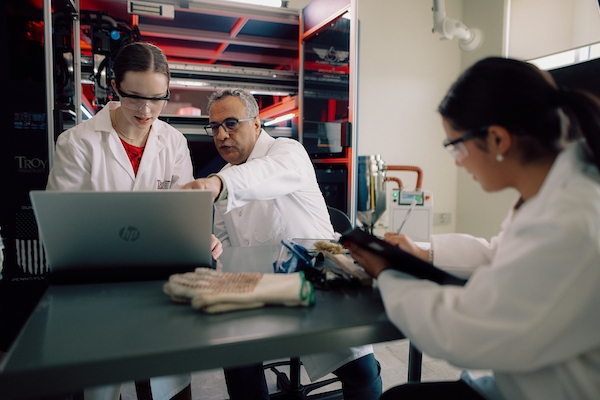
Founded in 1887 as a teacher's college, Troy University began with a simple but powerful mission—to prepare educators who would shape minds and strengthen communities across Alabama. From those early days, TROY has evolved into a comprehensive, global institution recognized for academic excellence, innovation, and service. Yet throughout every era of growth, the University has remained grounded in the same guiding ideals: to educate the mind to think, the heart to feel, and the body to act.
That enduring philosophy continues to anchor Troy University as it embraces the opportunities
and challenges of higher education in a rapidly changing world. Today, Troy serves
students across multiple campuses and modalities and around the globe, offering programs
that blend tradition with innovation and scholarship with real-world application.
The University's legacy as a leader in teaching now extends to discovery, creativity,
and global engagement, preparing graduates for purposeful lives of leadership and
service.
The Troy University Strategic Plan 2030, The Trojan Tradition: Elevating Our Legacy, Empowering Our Future, charts a course that is both ambitious and authentic. Guided by five strategic themes, this plan ensures that as Troy advances into the future, it remains firmly rooted in the values and identity that have defined it for more than a century. These themes of elevating our legacy, empowering our students, strengthening our communities, advancing our discovery, and sustaining our future reflect both where we have come from and where we are going: a university steadfast in mission, bold in vision, and united in purpose.
Decades of careful stewardship and strategic initiatives have positioned Troy University
for this moment. This plan reflects the dedication of our faculty, staff, students,
alumni, and partners who together make Troy a place of purpose and progress. With
clear distinction and collective resolve, Troy University stands ready to honor the
Trojan Tradition that will continue to inspire generations to come.
Troy University will be known for academic excellence, growing research productivity, outstanding retention and graduation of its students, and providing the social, educational, and economic development for the surrounding region.
Troy University is a public institution comprised of a network of campuses throughout Alabama and worldwide. International in scope, Troy University provides a variety of educational programs at the undergraduate and graduate levels, to include doctoral programs, for a diverse student body in traditional, nontraditional and emerging electronic formats. Academic programs are supported by a variety of student services which promote the welfare of the individual student. Troy University's dedicated faculty and staff promote discovery and exploration of knowledge and its application to life-long success through effective teaching, service, creative partnerships, scholarship and research.

Troy University's strategic themes guide our path forward charting a bold future while remaining grounded in the values, traditions, and identity that define the Trojan experience. These five priorities build upon our legacy of teaching excellence, student empowerment, and community impact, ensuring that we continue to serve Alabama and the world with purpose, innovation, and distinction.
We build upon Troy's proud legacy of teaching the mind to think, the heart to feel, and the body to act by fostering innovation in pedagogy, research, and academic distinction.
1.1: Strengthen teaching excellence across all modalities.
1.2: Enhance academic distinction and student access to excellence.
1.3: Align academic offerings with workforce and societal needs.
1.4: Support and recognize faculty excellence.
|
Goal 1.1 |
1.1.1 |
Establish and sustain a Center for Faculty Innovation by 2026. |
|
1.1.2 |
Improve quality and consistency of online and in-person instruction. |
|
|
1.1.3 |
Increase faculty engagement in teaching development. |
|
|
Goal 1.2 |
1.2.1 |
Increase student enrollment in the honors program. |
|
1.2.2 |
Track retention and graduation rates of honors students. |
|
|
Goal 1.3 |
1.3.1 |
Align programs with state and regional workforce demand. |
|
1.3.2 |
Conduct regular program reviews to inform redesign |
|
|
1.3.3 |
Develop and redesign general studies curriculum. |
|
|
Goal 1.4 |
1.4.1 |
Expand professional development, scholarly support, and training opportunities for faculty. |
|
1.4.2 |
Strengthen systems for tracking faculty teaching, scholarship, and service. |
|
|
1.4.3 |
Increase recognition of faculty contributions in teaching, research, and service. |
Students are at the heart of Troy University's mission. We create an environment where every student can thrive academically, socially, and personally.
2.1: Strengthen recruitment, enrollment, and access pathways.
2.2: Improve retention and student success outcomes.
2.3: Promote student well-being, belonging, and engagement.
2.4: Support timely degree completion and career readiness.
|
Goal 2.1 |
2.1.1 |
Improve transfer and dual enrollment pathways. |
|
2.1.2 |
Strengthen recruitment yield through academic alignment and strategic outreach. |
|
|
Goal 2.2 |
2.2.1 |
Implement a university-wide advising framework. |
|
2.2.2 |
Increase first-year retention rate for Troy Campus and Online. |
|
|
2.2.3 |
Implement instructor interventions for high DFW courses and strengthen academic early alerts. |
|
|
Goal 2.3 |
2.3.1 |
Increase second-to-third year retention rate for the Troy Campus. |
|
2.3.2 |
Expand access to mental health, wellness, and student support services. |
|
|
2.3.3 |
Increase student involvement in co-curricular and engagement activities. |
|
|
Goal 2.4 |
2.4.1 |
Increase four-year graduation rate. |
|
2.4.2 |
Reduce “eligible but not enrolled” term-student population. |
|
|
2.4.3 |
Track post-graduation outcomes to inform program improvement. |
As a catalyst for discovery and connection, Troy University expands knowledge, research, and collaboration to strengthen Alabama's economy and extend its influence around the world.
3.1: Grow institutional research and scholarly productivity.
3.2: Strengthen doctoral education quality, completion, and outcomes.
3.3: Develop centers of excellence in high-impact fields.
3.4: Enhance global academic engagement and visibility.
|
Goal 3.1 |
3.1.1 |
Increase external funding and scholarly output. |
|
3.1.2 |
Improve system for efficiently tracking faculty research productivity and workload. |
|
|
3.1.3 |
Enhance research infrastructure and technology support services. |
|
|
Goal 3.2 |
3.2.1 |
Increase enrollment and graduation rates in doctoral programs. |
|
3.2.2 |
Track research/dissertation output by doctoral faculty and students. |
|
|
3.2.3 |
Track post-graduation placement of doctoral graduates. |
|
|
Goal 3.3 |
3.3.1 |
Support growth of centers in AI, Health Sciences, and Applied Technologies. |
|
3.3.2 |
Increase interdisciplinary collaboration among faculty and graduate students. |
|
|
3.3.3 |
Expand partnerships that support research and graduate education. |
|
|
Goal 3.4 |
3.4.1 |
Increase faculty and student participation in international programs, exchanges, and conferences. |
|
3.4.2 |
Increase applications for competitive fellowships such as Fulbright. |
|
|
3.4.3 |
Grow global research collaborations and academic partnerships. |
Through strengthened workforce capacity, modernized digital systems, and intentional investment in physical and virtual environments, Troy University ensures stability and adaptability for the decade ahead.
4.1: Strengthen a mission-driven academic workforce.
4.2: Ensure high-quality academic systems and digital tools.
4.3: Use data to support academic decision-making and accreditation.
4.4: Align academic facilities with program needs and growth.
|
Goal 4.1 |
4.1.1 |
Expand leadership and professional development for faculty. |
|
4.1.2 |
Maintain or improve faculty retention. |
|
|
Goal 4.2 |
4.2.1 |
Maintain reliable learning platforms and classroom instructional technologies. |
|
4.2.2 |
Expand adoption of academic technologies supporting teaching and learning. |
|
|
4.2.3 |
Expand digital tools supporting student academic success and advising. |
|
|
Goal 4.3 |
4.3.1 |
Improve accessibility and use of academic performance dashboards. |
|
4.3.2 |
Strengthen assessment practices at the program and general education levels. |
|
|
4.3.3 |
Maintain accreditation readiness across all academic programs. |
|
|
Goal 4.4
|
4.4.1 |
Conduct regular review of academic space needs and priorities. |
|
4.4.2 |
Improve alignment between program delivery and available facilities. |
|
|
4.4.3 |
Support planning for emerging academic programs and research facilities. |
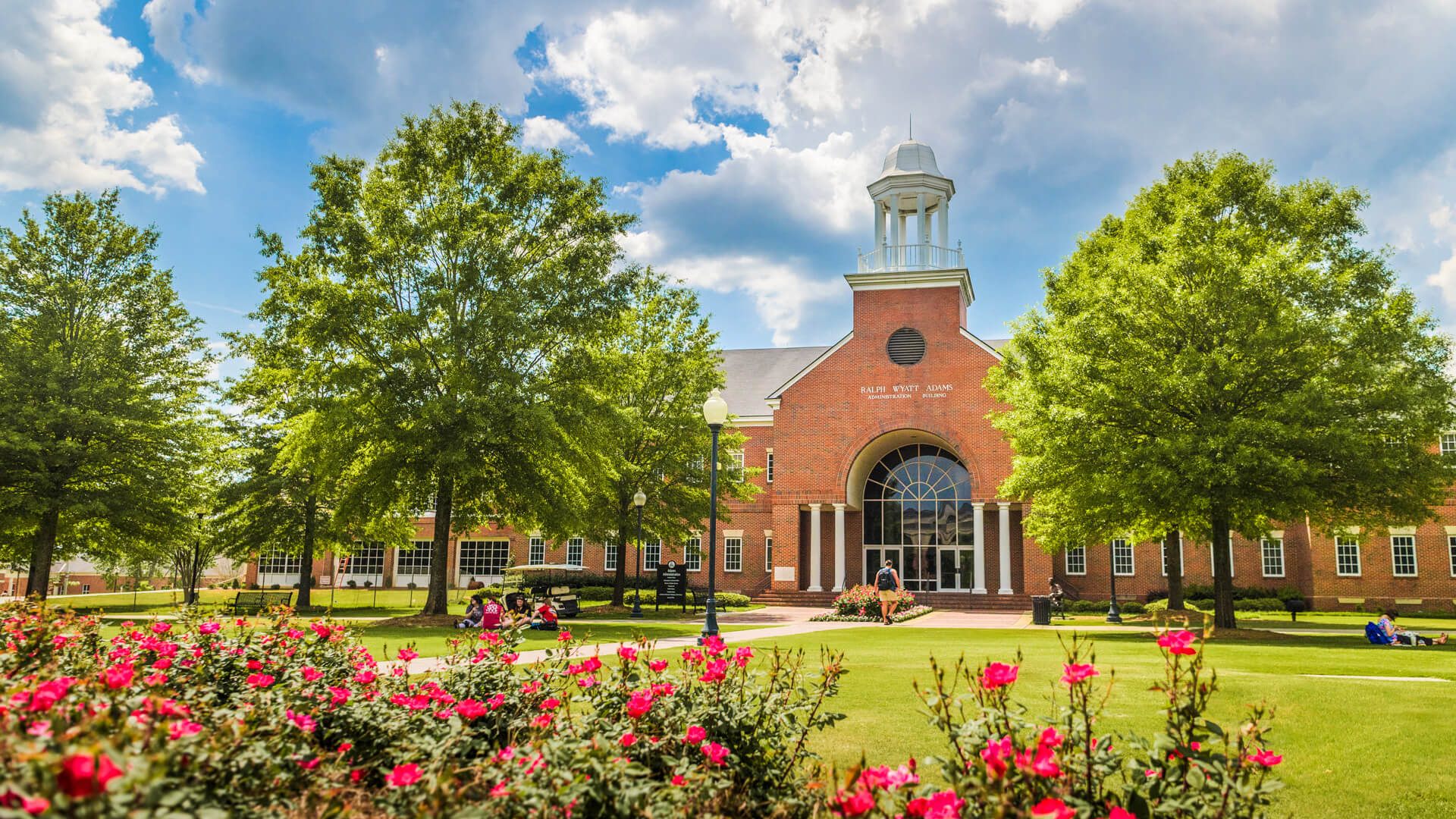
Troy University Institutional Research, Planning & Effectiveness (IRPE)
011 Adams Administration Building
Troy, Alabama 36082
Phone: 334-670-3803
Fax: 334-670-3815

October 16, 2026

October 16, 2026