Applied Mathematical Sciences - Mathematical Physics - Thesis
Program Info
Translate Theory into Insight with a Master's in Mathematical Physics
Are you fascinated by relativity, quantum theory and the mathematical structures that define our understanding of the universe? Do you want a graduate program that takes you beyond the classroom into concepts like Einstein's field equations, differential geometry and quantum field theory in curved spacetime? At Troy University, the Master of Science in Applied Mathematical Sciences – Mathematical Physics (thesis) concentration makes that possible. You'll study the foundations of modern physics, develop advanced mathematical fluency and work with faculty who are actively engaged in research. This master's in mathematical physics prepares you to analyze current theoretical work and pursue doctoral study or research roles that demand both high-level problem-solving and intellectual depth.
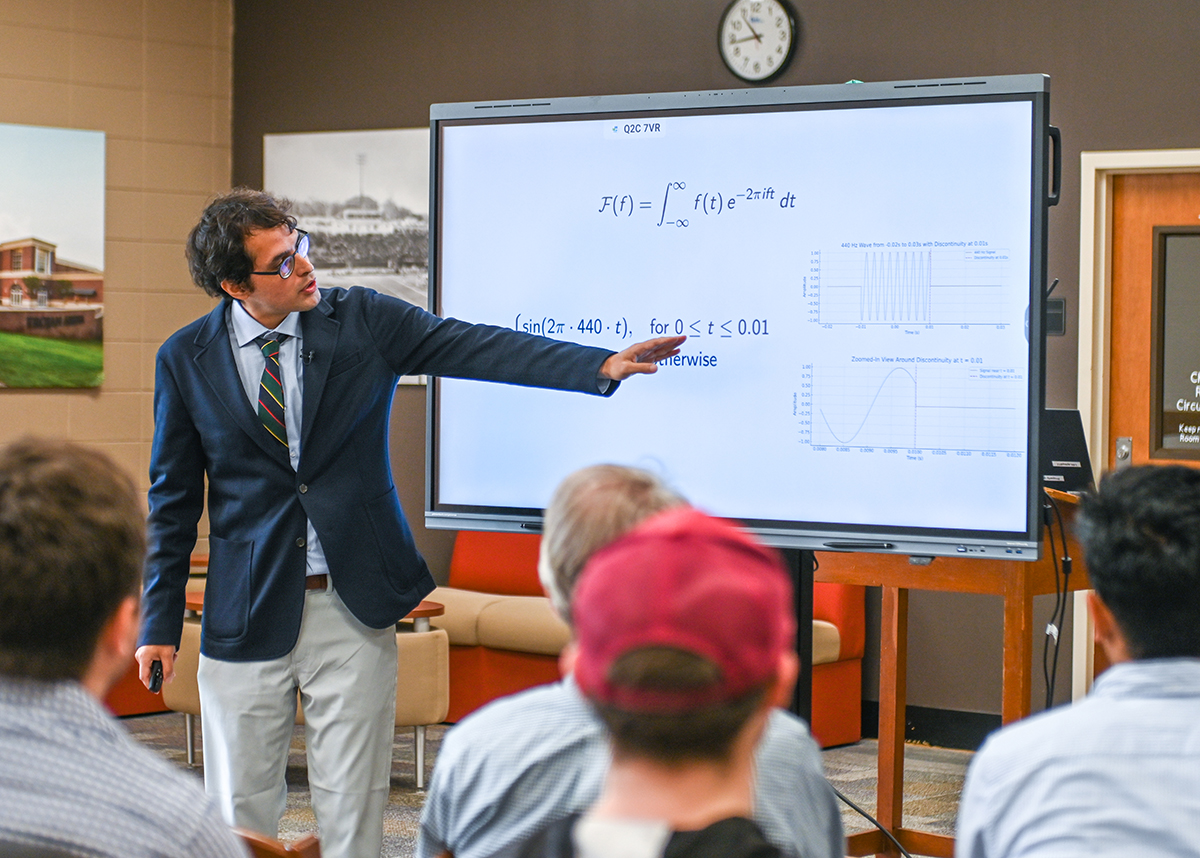
A Master's in Mathematical Physics with Ph.D.-Level Opportunities
Take coursework that most students don't encounter until their Ph.D. program. In TROY's master's in applied mathematics with a concentration in mathematical physics, you'll move beyond theory into practice through advanced classes such as Relativity I and II, Differential Geometry I and II, Partial Differential equations I and II, and Algebraic Quantum Field Theory. Students often ask, “What does a theoretical physicist do on a daily basis?” At TROY, you'll start to find out — modeling complex systems, testing ideas against established research and presenting results with the precision expected in the field. This early immersion in the habits of professional researchers gives you a rare edge on Ph.D. program applications and in future research careers.
Work Alongside Experts in the M.S. in Applied Mathematical Sciences – Mathematical Physics Program
TROY's graduate program in mathematical physics puts research at the heart of your master's experience. You'll learn from faculty who are experts in relativity, microlocal analysis and quantum field theory in curved spacetime. Small classes mean you won't just solve equations — you'll analyze published work, conduct original projects and present results with clarity. This research-first approach mirrors the expectations of doctoral programs and research careers, giving you the chance to practice as a theorist now while building skills that transfer into academia, industry or education. Wondering how to become a theoretical physicist? At TROY, you'll find the answer in a collaborative research culture that prepares you for the future you're aiming for.
Mathematical Physics Curriculum
Mathematical Physics Degree Program Locations
The Mathematical Physics concentration is only offered on the Troy Campus. For more information about program availability and delivery options, call 1-800-414-5756. Before applying, contact Dr. Hoa Dinh at 334-670-5645 or Dr. Yafet Sanchez at 334-808-6862
Immerse Yourself in a Theoretical Physics Boot Camp
Faculty describe TROY's master's in mathematical physics as a “theoretical physics boot camp” — an intensive, focused experience that prepares you for the demands of doctoral study. Over two years, you'll move through advanced coursework in relativity, differential geometry and quantum theory in curved spacetime. A defining feature of the program is the thesis, where you'll shift from studying established theory to conducting original research under close faculty mentorship. In this process, you'll not only master mathematical frameworks but also practice the habits of a theorist — framing questions, solving complex problems and presenting results with clarity. The result is a master's program that bridges undergraduate preparation and Ph.D.-level work, giving you the discipline, perspective and skills to contribute at the highest level of modern physics. You'll also see where graduates work and how the theoretical physicist salary compares to other careers in research and analysis.
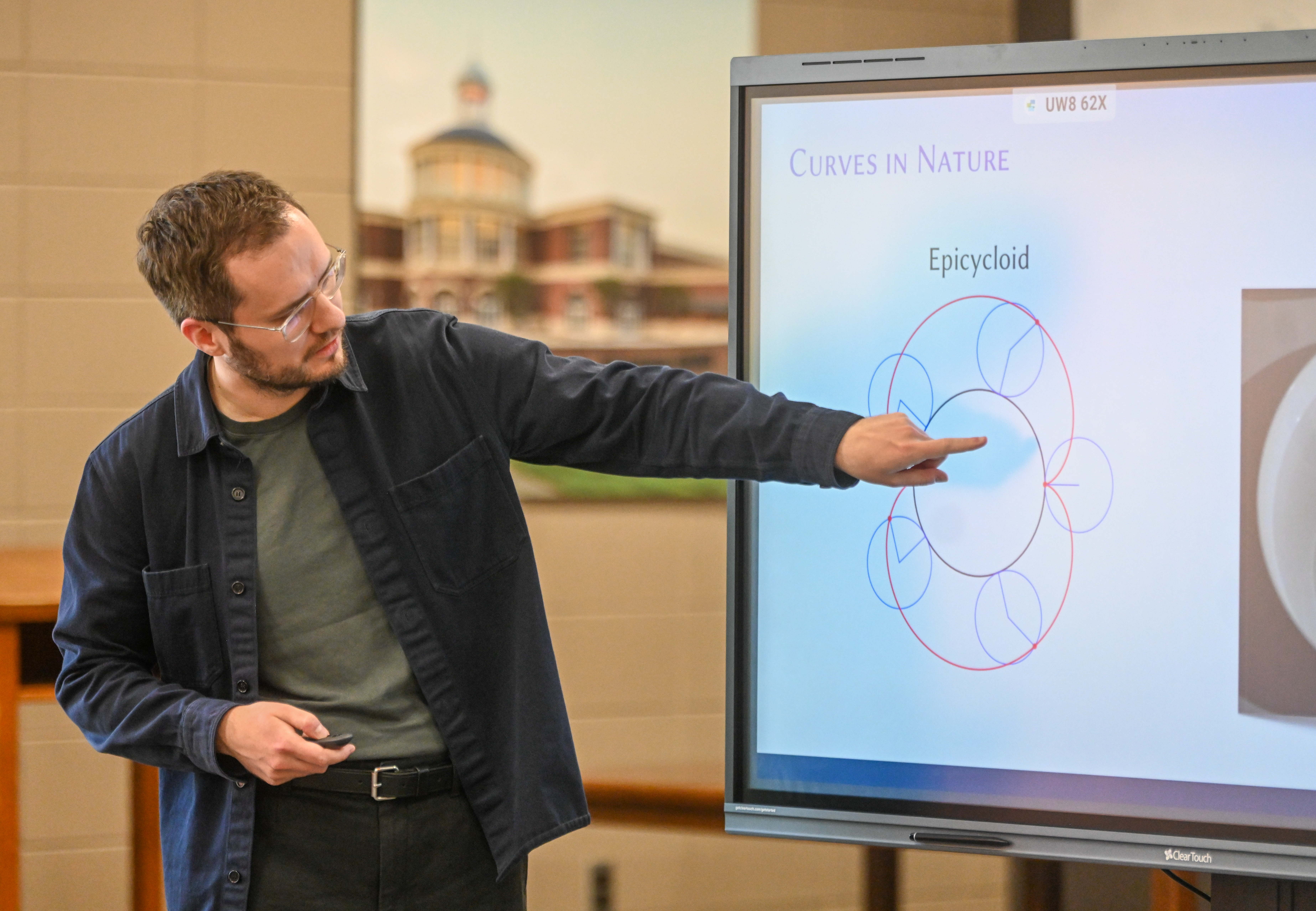
Careers with a Graduate Mathematical Physics Degree
With the Master of Science in Applied Mathematical Sciences – Mathematical Physics (thesis) concentration from TROY, you'll be prepared for Ph.D. programs in theoretical or mathematical physics as well as analytical careers in research, data science, finance and technology. Graduates pursue roles in universities, national labs, aerospace and education, applying advanced problem-solving and quantitative skills across disciplines.
Faculty Profiles
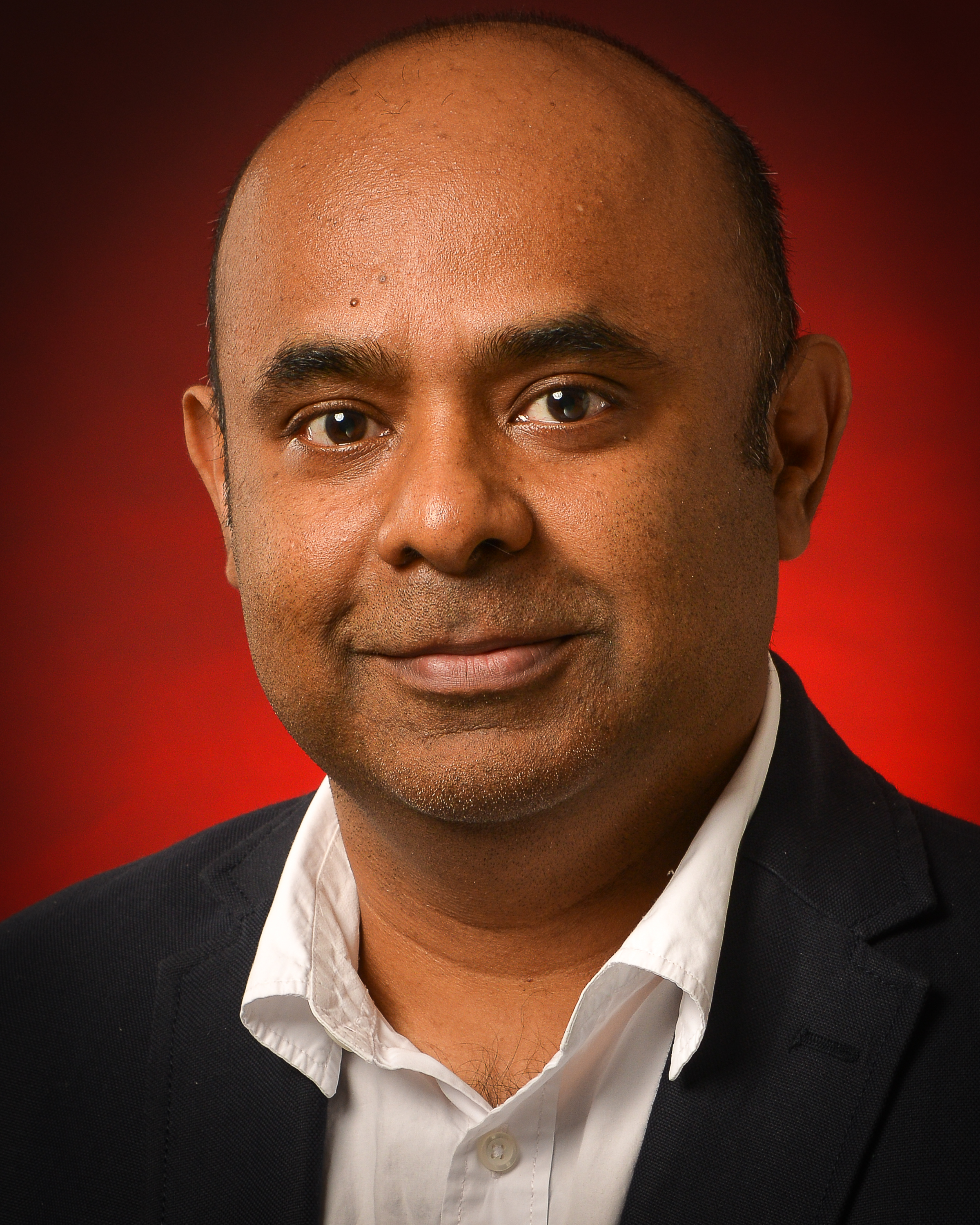
Dr. Govind Menon

Dr. Bruno Arderucio

Dr. Yafet Sanchez

Dr. Rakshak Adhikari
FAQ About the Master's in Mathematical Physics Program
To apply for the Master of Science in Applied Mathematical Sciences – Mathematical Physics (thesis) concentration at TROY, you'll need a bachelor's degree in mathematics, physics, computer science or a related field from an accredited institution. A minimum GPA of 2.5 overall, or 3.0 in your last 30 semester hours, is required. You'll also submit transcripts from all colleges or universities you've attended.
Mathematical physics brings advanced mathematics to bear on the deepest questions in modern physics. In TROY's master's program, you'll explore relativity, geometry and field theory in curved spacetime while developing the research habits of a professional theorist. So what is mathematical physics at TROY? It's the study of theory at the point where mathematics and physics meet — and where you prepare for doctoral study, teaching or research careers.
The work of a theoretical physicist centers on using mathematics to test ideas about how the universe works. At TROY, you'll experience those tasks directly — analyzing research, building models and presenting results with clarity. So what does a theoretical physicist do on a daily basis? They tackle problems in relativity, geometry and quantum theory, often in ways that overlap with the work of data scientists, scientific programmers and analysts in aerospace, defense and finance.
TROY's program takes about two years of full-time study. You'll complete 30 semester hours, including specialized courses in relativity, differential geometry and quantum field theory, before continuing to doctoral study or moving into related roles such as algorithm developer, simulation specialist or systems analyst.
Helpful Links